From informal to integrated: Lessons from Brazil on building inclusive waste systems
-

-
The Circulate Initiative
-
February 26, 2026
-
8 min read
The Circulate Initiative
February 26, 2026
8 min read
Authors: Madhu Narayan and Santwana Sneha
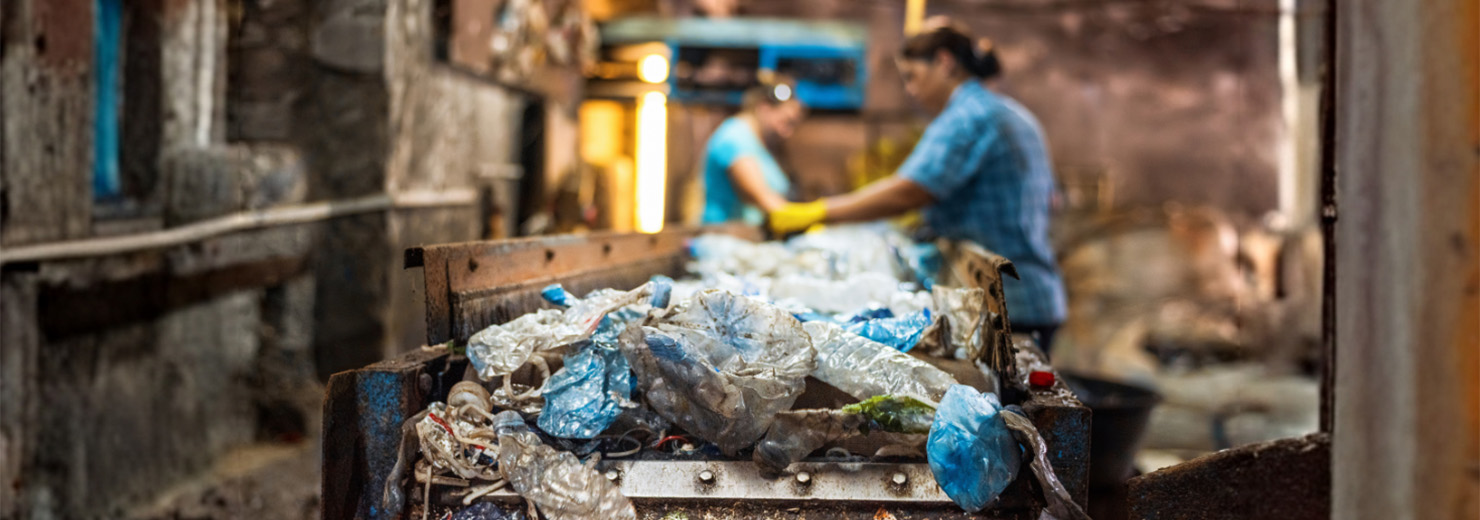
Brazil, the largest country in Latin America and fifth largest in the world, is home to an estimated 200,000 to 800,000 waste pickers, or “catadores,” who form the backbone of the country’s recycling system.
Brazil stands out globally for its early and sustained efforts to recognize and integrate informal waste workers through key regulatory reforms. Since the late 1980s, catadores have organized into cooperatives, laying the foundation for more structured inclusion within municipal recycling systems in the early 1990s. In 2001, the National Movement of Waste Pickers (MNCR) was established, and waste picking was officially recognized as a profession in Brazil’s Occupational Classification (CBO). Subsequently, in 2007, regulations enabled municipalities to contract worker-led cooperatives directly, a change that has been instrumental in facilitating cooperative participation in municipal systems.
At present, the National Solid Waste Policy, enacted in 2010, sets the guidelines for waste management activities in Brazil. The law introduced extended producer responsibility, reverse logistics requirements, and formal recognition of informal workers, while emphasizing shared responsibility across sectors.
Brazil’s path to integration
Brazil’s current system reflects gradual reform rather than a single breakthrough. Municipal partnerships with cooperatives expanded over time, supported by access to facilities and predictable material flows. Reverse logistics obligations shifted corporate accountability upstream, embedding recovery responsibilities within supply chains. Credit-based mechanisms introduced financial incentives into the system. Legal reforms strengthened the formal standing of cooperatives, enabling them to sign contracts, access grants, and participate directly in structured supply chains.
These developments created the conditions for more stable models to emerge alongside informal activity. For countries seeking to translate circular economy ambitions into worker-centered implementation approaches, Brazil offers many practical lessons.
Expanding the Responsible Sourcing Initiative
To understand how these policies translate into practice, we visited cooperatives and autonomous waste pickers in São Paulo in January, as preparation for our expansion of the Responsible Sourcing Initiative into Latin America this year.
In São Paulo, some of the cooperatives we visited were well-established sorting centers operating under formal agreements with municipalities – a strong example of institutional support. At the same time, we observed that autonomous waste pickers work independently, navigating volatile material recovery markets and often operating outside the cooperative structure. These parallel realities demonstrate measurable progress and persistent structural challenges that continue to shape the sector.
Key takeaways and reflections
Cooperative-led models: Stability through organization
In many cities across Brazil, cooperatives illustrate what organized waste work can achieve. Where municipalities provide infrastructure and steady material flows, cooperatives can offer safer working conditions, more predictable incomes, and access to social services.
In several structured cooperatives, members reported incomes exceeding minimum wage levels. Governance systems, including elected leadership and administrative councils, create internal accountability. Training programs improve material quality, safety standards, and operational efficiency. Importantly, training on documentation and traceability positions the cooperatives to engage with the private sector and contribute to formal collection and recycling targets.
Organized systems can create employment pathways for marginalized groups, including women, migrants, and people who were previously incarcerated. More stable access to materials improves income predictability, structured sorting environments enhance occupational safety, and collective governance strengthens worker voice and decision-making power.
A particularly interesting feature of Brazil’s cooperative ecosystem is the way individual cooperatives organize into broader networks. These networks enhance collective bargaining power when negotiating municipal contracts and collection opportunities, while also enabling them to aggregate sufficient volumes to meet end-market demand.
However, organization alone does not protect cooperatives from market volatility. Not all cooperatives have access to municipal partnerships, and long-term sustainability often depends on scale, infrastructure investment, leadership continuity, and access to capital. A key observation was that most well-equipped and organized cooperatives do not purchase materials from autonomous waste pickers. This trade-off is necessary to maintain material quality and meet the volume requirements these cooperatives have committed to, leaving the most vulnerable segments of the workforce outside the more stable and formal systems.
Autonomous waste pickers: Flexibility and vulnerability
A significant proportion of Brazil’s autonomous waste pickers are men who continue to operate independently. As seen globally, informal waste pickers value the flexibility and autonomy that informal work provides. However, without aggregation or bargaining power, autonomous waste pickers face volatile prices, and their income can fluctuate sharply depending on material type and market demand – often in contrast to the relative stability found in more structured cooperative environments.
Several initiatives in Brazil aim to bridge this gap without forcing full formalization. We learned about Conexão Cidadã (Citizen Connection), a platform dedicated to raising awareness about the rights and dignity of homeless waste pickers, aimed at supporting citizenship and guaranteeing access to essential services. Another initiative we encountered was UNICATA, a University for and with Waste Pickers, designed to promote training, valorization, and knowledge exchange for waste pickers in collaboration with academic institutions.
Many autonomous waste pickers rely on hand carts – some provided through social programs, others self-financed – illustrating both institutional support and individual agency in improving working conditions.
Registration programs, direct digital payments, and connections to public services help improve stability while preserving autonomy. These models demonstrate that inclusion requires intentional system design.
The role of the private sector: Driving increased collection
Corporate engagement in Brazil’s waste system has been shaped by regulatory scrutiny and rising responsible sourcing expectations. Reverse logistics obligations have increased demand for traceable, responsibly sourced materials, while human rights and supply chain due diligence requirements are reshaping how companies assess and engage their value chains.
In response to the regulations, companies have been investing in cooperative capacity, logistics systems, training, digital traceability tools, and dedicated initiatives to build relationships within their supply chains. Some models enable payments directly to waste pickers, while others experiment with credit-based systems or deposit-return mechanisms to incentivize collection and strengthen traceability.
When private-sector commitment aligns with public policy objectives, outcomes are stronger, leading to improved material quality, more reliable supply chains, and greater income stability for workers. However, incentives from credit systems often do not reach the autonomous waste pickers due to a lack of formalization and traceability.
A key lesson is that corporate sourcing strategies must align with regulatory frameworks and worker-centered safeguards to generate durable impact.
Waste picker movements: Driving policy recognition and inclusion
During our visits, we learned how waste picker movements in Brazil have shaped policy, strengthened informal sector voices, and advanced economic empowerment. Two key movements are the National Movement of Waste Pickers (MNCR) and the National Association of Recyclable Materials Collectors (ANCAT). MNCR brings together over 800 cooperatives and associations, representing more than 70,000 waste pickers, while ANCAT supports more than 500 cooperatives across 269 cities.
These initiatives have contributed to improved working conditions, greater income stability, and increased social recognition – though challenges such as inconsistent municipal support, infrastructure gaps, and fluctuating material prices remain. Some of the cooperatives we visited noted that being part of a larger association enhances bargaining power and access to markets.
What Brazil teaches us about systemic integration
The waste management landscape in Brazil offers an important lesson for emerging circular economy markets: integration succeeds when systems are intentionally aligned. Policy frameworks, corporate sector commitment, public investment, and worker-led models must function in coordination rather than in isolation to deliver lasting impact.
Organized waste picker movements already operate within the established recycling market in Brazil, demonstrating what is possible when waste pickers are recognized and pathways to integration are developed. Brazil also highlights that integration is not achieved through organization alone. It requires sustained public investment, consistent regulatory enforcement, and predictable access to materials.
As The Circulate Initiative expands the Responsible Sourcing Initiative’s regional engagement with seven active programs across South Asia, South East Asia , Africa, and growing work in Latin America, these lessons will inform how policy frameworks and vertically integrated systems are translated into measurable, worker-centered outcomes.
References
- International Alliance of Waste Pickers. (n.d.). Law Report: Brazil [online]. Available from: https://globalrec.org/law-report/brazil/ [accessed February 20, 2026].
- WIEGO. (2010). National Solid Waste Policy – Brazil (Law No. 12.305/2010) [online]. Available from: https://www.wiego.org/wp-content/uploads/2019/09/Pereira-Brazilian-Waste-Policy.pdf [Accessed 20 February 2026].
- WIEGO. (2021). Waste Pickers in Brazil: A Statistical Profile [online]. Available from: https://www.wiego.org/wp-content/uploads/2021/12/WIEGO_Statistical_Brief_N29_Brazil_WPs.pdf [accessed February 20, 2026].
- World Bank. (2018). What a Waste 2.0: A Global Snapshot of Solid Waste Management to 2050 [online]. Available from: https://openknowledge.worldbank.org/entities/publication/d3f9d45e-115f-559b-b14f-28552410e90a [accessed February 20, 2026].
- Circularity Gap Report. (n.d.). Brazil [online]. Available from: https://dashboard.circularity-gap.world/report/brazil/overview [accessed February 20, 2026].